

Cable Reel Trailer for Sale: What to Check Before You Buy
If you search for a cable reel trailer for sale, you likely handle heavy drums every day.
These trailers move large cable reels safely between storage areas and job sites.
Choosing the wrong trailer can slow work and raise risk.
Choosing the right one saves time and protects your crew.
Why cable reel handling needs proper equipment
Cable reels are heavy and hard to balance.
Moving them with forklifts or makeshift tools often causes damage.
A reel trailer supports the drum from the core.
This keeps the reel stable during transport and payout.
Good trailers also reduce manual work.
The operator controls loading, lifting, and rotation from one point.
This matters on long projects where downtime costs real money.
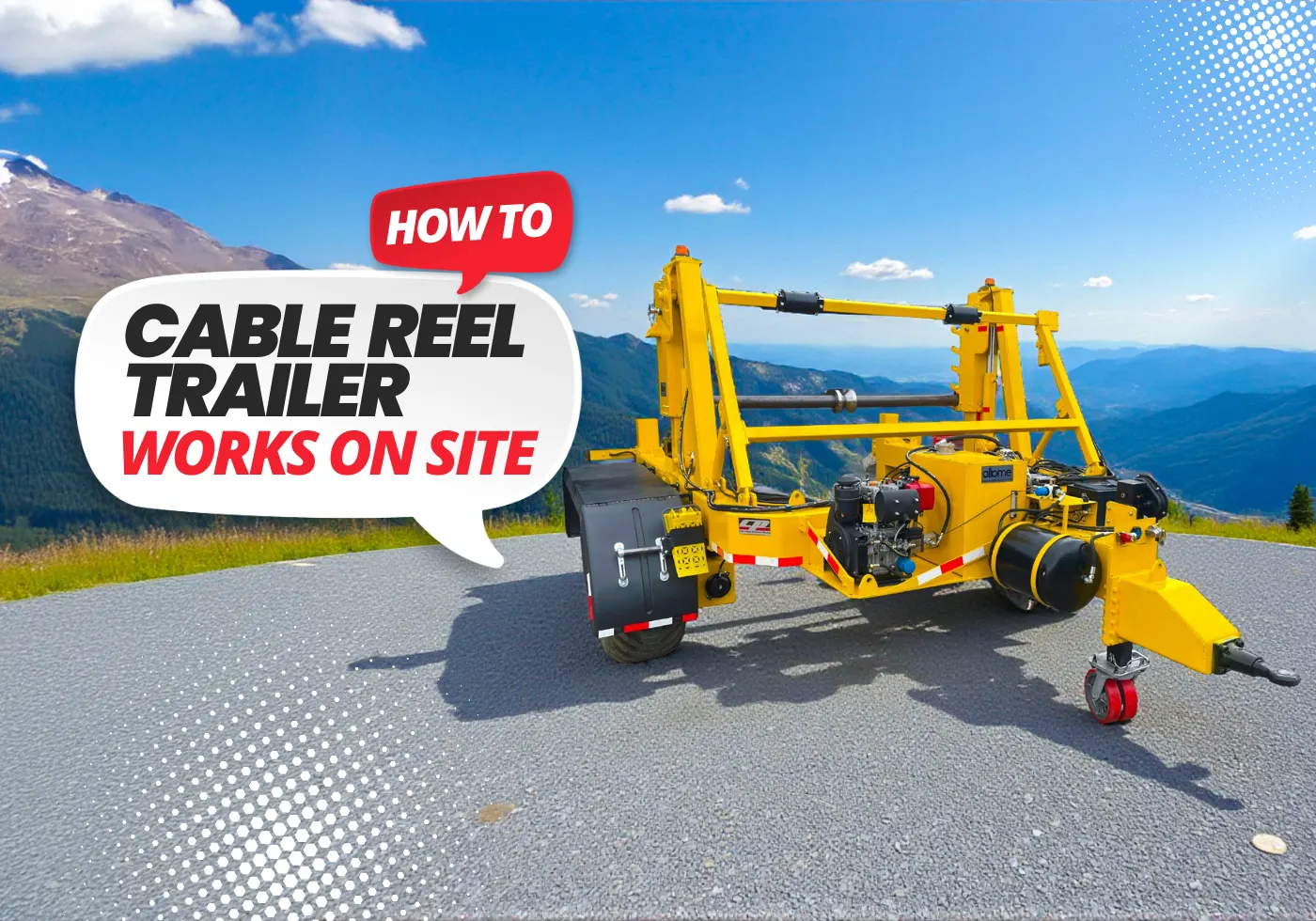
How a cable reel trailer works on site
The trailer holds the drum on a steel shaft.
The shaft lets the reel turn smoothly during cable payout.
Many models use hydraulic lifting arms.
These arms raise the drum without sudden movement.
Controlled rotation prevents cable twists.
It also keeps tension steady during laying.
On rough ground, wide tires and balanced frames help a lot.
They keep the trailer stable even with heavy loads.
What buyers should check before choosing a trailer
Start with load capacity.
The trailer must handle the reel weight, not just its size.
Drum diameter also matters.
Some reels exceed standard limits.
Brake type is another key point.
Air brakes offer better control for heavy loads.
Look at loading width.
Wider frames make reel placement easier.
Hydraulic control layout should be simple.
Clear controls reduce mistakes during work.
Where cable reel trailers are used most
Power line projects use them daily.
Large reels move across long distances.
Telecom and fiber crews rely on them in cities.
Controlled payout helps in narrow spaces.
Industrial plants use reel trailers for upgrades.
Heavy cables move through fixed routes.
Renewable energy sites also depend on them.
Wind and solar farms often need long cable runs.
Why many contractors upgrade their trailers
Old trailers often lack balance.
They struggle with modern reel sizes.
Newer designs focus on safety.
They keep the reel centered during movement.
Hydraulic systems reduce manual lifting.
This lowers injury risk.
Better trailers also last longer.
Strong frames resist twisting under load.
Final thoughts before you decide
A cable reel trailer is not just a transport tool.
It controls how cable leaves the reel.
The right trailer protects the cable, crew, and schedule.
It becomes part of your daily workflow.
If you work with large drums often, quality matters.
A well-built trailer pays for itself over time.
Discover high-performance cable installation solutions tailored to your needs – engineered for efficiency, durability, and precision.


